Forever chemicals in the Hudson Valley: what PFAS are, where they come from, and what we can do

Disclaimer: The linked review article (PFAS in the Hudson Valley: an Orange Environment technical review) is an Orange Environment, Inc. published technical review prepared for public information and local decision-making. It is not a peer-reviewed article in an external academic journal, nor is it medical or legal advice.
There is a class of chemicals in your drinking water, your rain jacket, your takeout container, and your bloodstream that will still be there long after all of us are gone. They are called per- and polyfluoroalkyl substances — PFAS — and they earned the nickname 'forever chemicals' honestly. The carbon-fluorine bond that makes them useful is one of the strongest bonds in organic chemistry, and essentially nothing in the environment breaks it.
I have written a full review of the science and the regulatory landscape, with citations, for people who want the primary sources: PFAS in the Hudson Valley: an Orange Environment technical review — this post is the plain-language version.
What PFAS actually are. There are several thousand of them. They repel oil and water, tolerate heat, and act as surfactants, which is why they show up in nonstick cookware, waterproof fabrics, grease-resistant food packaging, cosmetics, ski wax, metal plating, and firefighting foam. Most of what we know about their health effects comes from studies of just a handful of the older, long-chain compounds — PFOA and PFOS in particular. The rest are largely uncharacterized, which is not the same thing as safe.
Where they come from in the Hudson Valley. Four pathways matter here. Firefighting foam used at airfields and training sites creates concentrated groundwater plumes — this is the mechanism behind the worst drinking-water contamination cases in the Northeast. Industrial dischargers send PFAS to sewage treatment plants that were never designed to remove them. Sludge from those plants gets spread on farm fields as biosolids, where PFAS leach toward shallow groundwater and get taken up by crops. And landfill leachate, including from old unlined sites, releases PFAS that often cycles right back to the treatment plant.
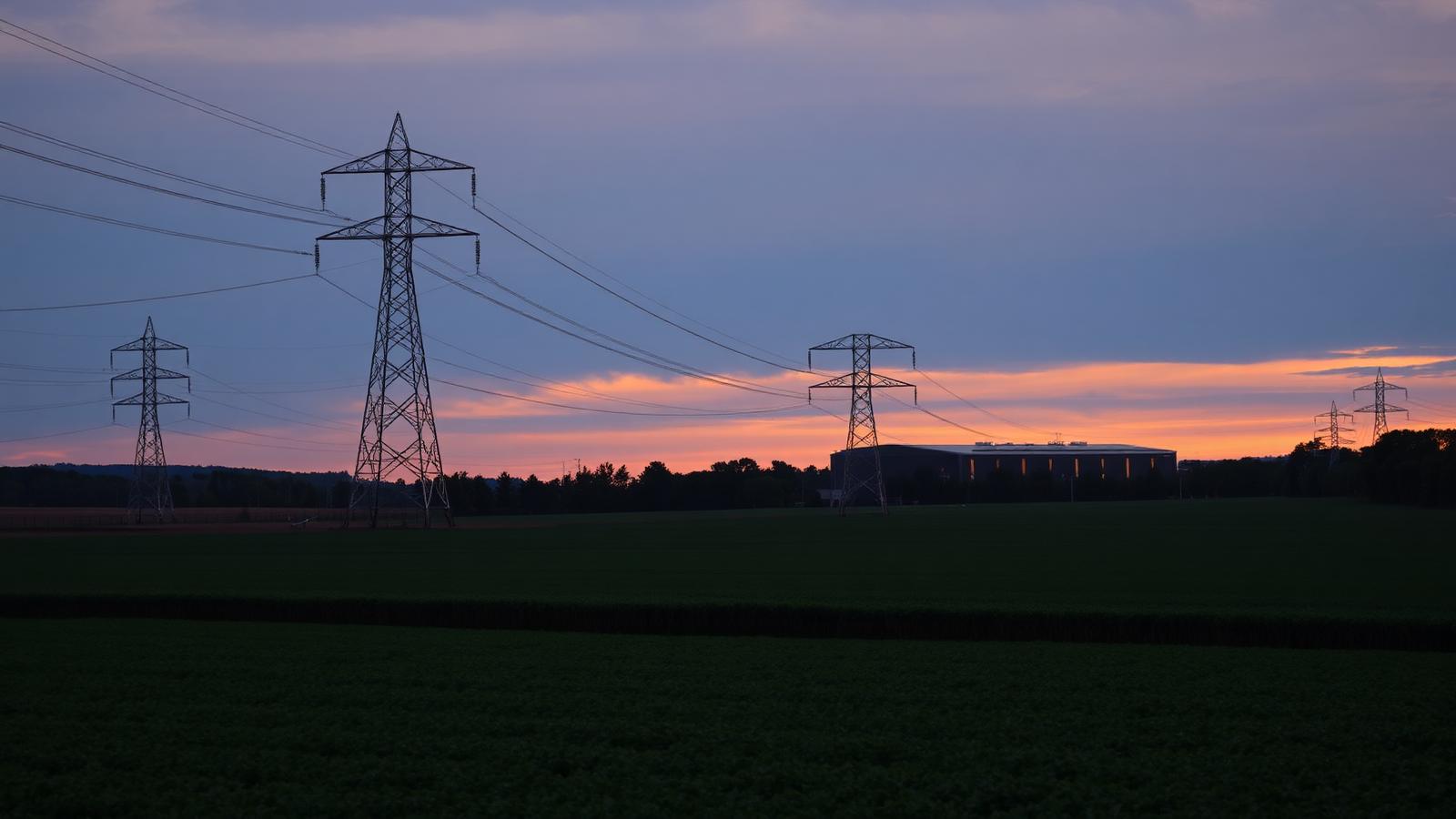
There is a fifth factor that gets less attention: development pattern. Large impervious sites — warehouses, data centers, parking oceans — move stormwater fast and skip the vegetated buffers that slow contaminants down. When that stormwater heads toward a shallow aquifer feeding a public well, the practical distance between a source and a tap gets shorter. This is one reason our sprawl work and our water work are the same fight.
How people get exposed. If your water supply is contaminated, drinking water dominates everything else. If it is not, diet usually contributes more — fish, meat, dairy, and food that touched fluorinated packaging. House dust is a bigger contributor than most people realize, especially in homes with treated carpet and upholstery.
And exposure sticks. PFOA and PFOS have serum half-lives measured in years. If your exposure stopped today, your blood levels would decline slowly over the following decade. That is the practical reason source control beats behavior change: you cannot personal-responsibility your way out of a chemical that stays in you for years.
What the health evidence shows. The federal Agency for Toxic Substances and Disease Registry and subsequent reviews link PFAS exposure to increased cholesterol, changes in liver enzymes, lower infant birth weight, thyroid disruption, pregnancy-induced hypertension and preeclampsia, and increased risk of kidney and testicular cancer.
The finding that should get the most attention is immune suppression. Multiple independent studies find that children with higher PFAS levels mount weaker antibody responses to routine childhood vaccines. It shows up at comparatively low serum concentrations, it is measurable, and it replicates across different populations. Recent laboratory work on human immune cells gives that signal a plausible mechanism.
What the rules do and do not cover. In April 2024 the EPA finalized the first enforceable federal drinking-water limits for PFAS: 4 parts per trillion for PFOA and PFOS, 10 parts per trillion for three others, plus a combined hazard index. New York moved earlier, adopting 10 parts per trillion limits for PFOA and PFOS in 2020. That is real progress.
It is also structurally incomplete in three ways. It covers a handful of compounds out of thousands, which lets manufacturers swap a regulated long-chain chemical for an unregulated short-chain one that is just as persistent and travels farther in groundwater. It does not cover private wells at all — and a large share of Orange County households drink from private wells, tested only if the owner pays for it. And there is no enforceable standard for PFAS in biosolids spread on farmland or in landfill leachate.
Five things municipalities can do now.
1. Inventory the source zones. Map historical firefighting-foam sites, industrial dischargers, closed landfills, and biosolids application fields inside source-water protection areas, and target monitoring there instead of sampling uniformly. 2. Test on an analyte list that matches the risk. Measuring only the regulated compounds can produce a treatment system that fails on the compounds nobody looked for. 3. Fund private-well testing publicly. Owner-paid testing systematically misses the households least able to afford remediation, turning a contamination problem into an equity problem. 4. Put PFAS pathways into land-use review. Environmental review of large impervious projects should address aquifer vulnerability and cumulative loading, not just peak stormwater flow. 5. Back class-based restriction at the state level. Local treatment is a permanent cost imposed on ratepayers by somebody else's production decision. Restricting non-essential uses at the source is the only thing that ends that cost.
What you can do. Find out where your water comes from and read your annual water-quality report. If you are on a private well, get it tested — and push your town to help pay for neighbors who cannot. If your water is contaminated, a certified reverse-osmosis filter at the tap is the most reliable household measure; standard pitcher filters generally are not. And show up at the hearings where warehouse and data-center projects get approved, because groundwater protection is decided there long before it becomes a treatment budget line.
Orange Environment has spent four decades on exactly this kind of technical review — reading the permit applications nobody else reads and showing up when it counts. If that work matters to you, membership starts at $25 and funds it directly.
Terra Meierdierck, Treasurer, Orange Environment, Inc.