How to compost at home: a beginner's guide for Orange County residents
Food scraps and yard waste make up roughly one-third of what American households throw away. In a landfill, that organic material decomposes without oxygen and produces methane, a greenhouse gas more than 25 times as potent as carbon dioxide over a 100-year period. Home composting is the single most effective household action you can take to cut landfill methane, build healthier soil, and grow a stronger pollinator garden at the same time.
What is composting, really? Composting is controlled aerobic decomposition. When you layer nitrogen-rich 'greens' with carbon-rich 'browns' and give the pile oxygen and moisture, beneficial bacteria and fungi break the material down into humus — a dark, crumbly soil amendment that feeds plants, improves drainage, and holds water in the root zone.
The climate case: keeping methane in check. The reason composting matters for climate change is not just that it diverts waste. It is how that waste breaks down. In a sealed landfill, anaerobic bacteria produce methane as they digest food scraps. Some modern landfills capture and flare that methane, but capture rates are imperfect and flaring still converts methane to CO2. In a backyard compost bin, the same material decomposes in the presence of oxygen and produces mainly carbon dioxide and water — a much smaller warming impact — plus a usable product that can replace synthetic fertilizer.
Types of composters: which one fits your home?
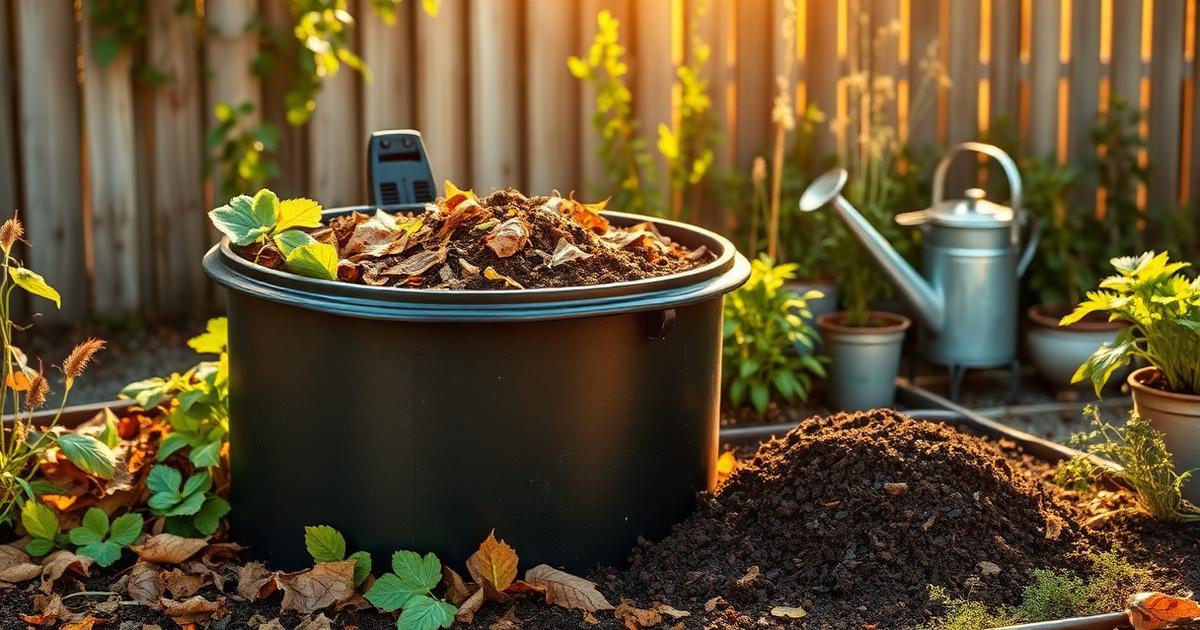
- Open stationary bin: A simple wire, wood, or plastic bin with a lid and bottom vent. Best for households with a yard, a steady supply of leaves, and a little patience. Turn the pile with a pitchfork every few weeks. - Tumbler composter: A sealed barrel on a frame that rotates for easy mixing. Tumblers heat up faster, finish compost in weeks rather than months, and keep pests out. Ideal for smaller yards and gardeners who want compost quickly. - Worm bin (vermicomposting): A shallow bin stocked with red wiggler worms that eat food scraps and produce worm castings. Worm bins fit under a kitchen sink or on a balcony and are perfect for apartments or households that produce mostly vegetable scraps. - Bokashi bucket: A sealed, airtight bucket with an inoculated bran that ferments food scraps, including meat and dairy, before they are buried or added to a conventional pile. Bokashi is a great pre-digestion system for households that want to compost everything but lack yard space. - Trench or in-ground composting: Dig a shallow trench in a garden bed, bury scraps, and cover them with soil. The material breaks down directly in place and feeds the bed over a season. This works well for people with garden space who do not want to manage a pile. - Electric composter: A countertop appliance that dehydrates and grinds food scraps into a dry, soil-like additive in hours. Convenient for apartments, though the finished product is not fully finished compost and works best as a fertilizer boost rather than a soil amendment.
A simple starter recipe for a new pile. Aim for a carbon-to-nitrogen ratio of about 25 to 30 parts carbon to one part nitrogen. In practice, that looks like two to three parts browns for every one part greens.
Greens: nitrogen-rich materials - Fruit and vegetable scraps - Coffee grounds and paper filters - Fresh grass clippings - Eggshells (crush them) - Tea bags without staples
Browns: carbon-rich materials - Dried leaves - Shredded newspaper and cardboard - Straw or hay - Sawdust from untreated wood - Paper towel and napkin rolls
What to leave out. Avoid meat, fish, dairy, fats, and oils in open bins; they attract rodents and slow decomposition. Skip diseased plants, weeds gone to seed, pet waste, and anything treated with pesticides. Orange County residents should also keep black walnut leaves out of the pile; juglone can inhibit plant growth.
How to start this weekend.
1. Choose a shady spot on bare soil near a water source and close enough to your kitchen that you will actually use it. 2. Set up your bin or dig a trench about a foot deep. 3. Add a 4-inch layer of browns as a base. 4. Mix in a 2-inch layer of greens, then another 4 inches of browns. 5. Moisten the pile until it feels like a wrung-out sponge. 6. Turn the pile every week or two to add oxygen and speed decomposition. 7. Add new scraps by burying them in the center of the pile.
Your compost is ready when it is dark brown, crumbly, and smells like earth. Screen out large pieces and return them to the pile. Use the finished compost to top-dress garden beds, mix into potting soil, or side-dress vegetables during the growing season.
Benefits beyond the bin. Composting reduces landfill waste, cuts methane emissions, and closes a nutrient loop in your own yard. It also improves soil structure, increases water retention, supports the microbes that protect plants from disease, and provides a slow-release source of nutrients that synthetic fertilizers cannot match. For pollinator gardens, compost is especially valuable: it helps establish deep-rooted native plants without chemical inputs that can harm bees and butterflies.
What to do if your pile is not cooperating. If the pile smells sour, it is probably too wet or too rich in greens. Add browns and turn it. If it is not breaking down, it may be too dry or too carbon-heavy. Add water and greens. If you see flies, bury fresh food under at least 6 inches of browns. Cold weather slows decomposition but does not stop it; keep the pile as large as a cubic yard to retain heat, or insulate a smaller bin with straw bales.
Orange County resources and next steps. If you are not ready to compost at home, the county offers yard-waste drop-off and seasonal compost giveback events. For those who do start composting, consider joining a local community garden or sharing excess finished compost with neighbors. The Hudson Valley Pollinator Project also has guidance on using compost to prepare beds for native plants. Whether you start with a worm bin under the sink or a tumbler in the backyard, the important step is starting: every pound of food scraps kept out of the landfill is a pound of methane that never enters the atmosphere.
Terra Meierdierck, Treasurer, Orange Environment, Inc.
Related Orange Environment resources: explore our recycling guide for Orange County waste rules, our native plants field guide for the keystone species that pair well with compost-fed soil, and the Pollinator Action Guide for ways to turn your yard into habitat. Membership at $25 a year supports local waste-reduction and climate-resilience advocacy.